
El Rancho in South Texas: Continuity and Change From 1750 offers a thoughtful and well-grounded look at the ranching traditions that shaped South Texas long before modern ranching became part of the Texas mythos. Rather than focusing only on cattle drives or famous ranch names, Joe S. Graham centers his work on the rancho as a way of life, rooted in Spanish and Mexican traditions that endured across generations.
Doing my family genealogy has taught me just how central ranching was to my family’s way of life. For hundreds of years, my ancestors raised cattle, goats, and sheep. In fact, on both my mother’s and father’s sides, I am part of the first generation that will no longer be cattlemen. For that reason, I wanted to share a book I’ve been enjoying: El Rancho in South Texas: Continuity and Change From 1750 by Joe S. Graham.
I know that many of you grew up on South Texas ranchos—I can tell from the emails I receive. While I wasn’t raised on a South Texas rancho myself, I did grow up on a Northeastern Mexican rancho just 14 miles from the border. The similarities were striking: the ranching traditions, the old jacales, and even the stone houses built for fortification. Many of those structures can still be found on Mexican ranches today.
One of the book’s strongest contributions is its emphasis on continuity—how ranching customs, land use, architecture, and daily routines persisted even as political control, economies, and borders changed. Graham makes it clear that ranching in South Texas did not suddenly appear in the 19th century but evolved from practices established well over a century earlier. This perspective is especially valuable for readers with Mexican or Tejano ancestry, as it places Hispanic ranchers at the foundation of the region’s ranching culture.
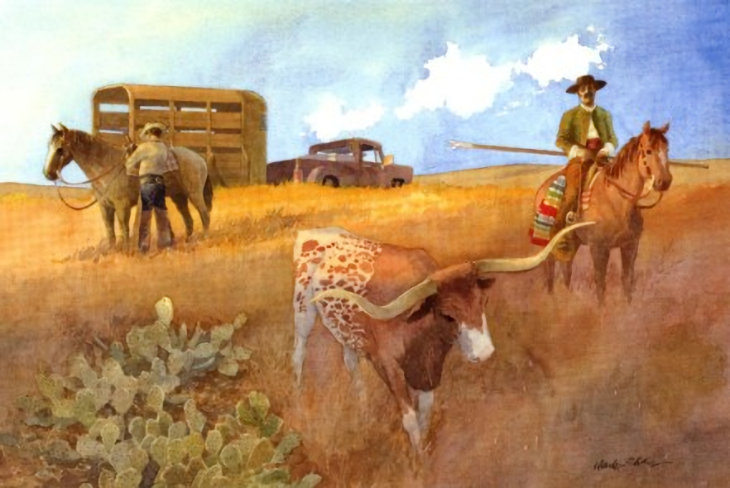
The author also does an excellent job describing the physical and social landscape of the rancho. From housing styles and work structures to livestock management and family labor, the book paints a clear picture of how ranches functioned as both economic units and family communities. These descriptions help bridge the gap between historical documents and lived experience, making the past feel tangible and familiar.
While the book is concise, it is effective in balancing academic research with accessible storytelling. It does not overwhelm the reader with technical language, yet it remains grounded in solid historical evidence. Readers looking for an in-depth economic analysis may want more detail, but for those interested in cultural history and everyday life, the book delivers meaningful insight.
Overall, El Rancho in South Texas is a valuable read for historians, genealogists, and descendants of ranching families alike. It reinforces the idea that ranching was not merely an occupation but a deeply rooted tradition that shaped identity, family structure, and regional culture—many elements of which can still be recognized today.
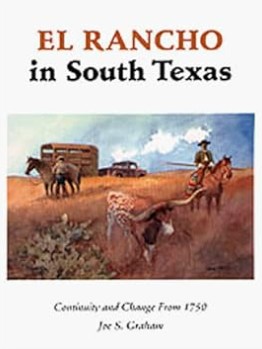
Cover of book “El Rancho in South Texas: Continuity and Change From 1750”
I hope that this books helps you understand more on how your ancestors made a living and or lived.
There are two places that you can find this book at. The first one is at the Texas Portal to Texas History and Amazon.com.
The Texas Portal To Texas History
Using the following link you can read the full book online and even download the images.
Read: El Rancho in South Texas: Continuity and Change From 1750
Amazon.com
Amazon has this book for sale and it starts around $9.50.
Buy: El Rancho in South Texas: Continuity and Change From 1750
Note: This post was originally posted on Feb 5, 2014.